Quick Answer
Waiting for the market to recover before selling the house in a divorce is one of the most common decisions separating couples in Milton make, and one of the most expensive. Staying put shares the carrying cost, the conflict and the delay, and it rarely recovers more than the sale would have cost. If one of you can carry the house alone, a buyout ends the wait. If neither can, selling during the separation splits any loss between you instead of one person wearing all of it later.
- Three paths: sell now, one spouse buys the other out, or keep the house together and sell later.
- Keeping it together means two people who are separating still share a mortgage, a roof or a tenant, and a decision they cannot finish.
- A loss shared during the separation is split by your agreement. A loss carried by one spouse after a buyout belongs to that spouse alone.
- The number that decides it is the full carrying cost on one income, not the mortgage payment and not the price you paid.
How to keep the house in a divorce is one of the questions people type most, and the honest answer starts with a different question: should you? Plenty of separating couples in Milton are not keeping the house because one of them wants it. They are keeping it because they bought at a price the market has not returned to, and selling now means writing down a loss on the largest asset either of them has. So they wait. One upstairs, one in the basement, or one in the house and one in a rental, both still on the mortgage, both waiting for a number on a screen to change. This post is about what that wait costs, and when taking the loss is the better decision.
What are the three options for the house in a divorce?
The matrimonial home follows one of three paths, and the difference between them is who carries the risk.
Why do separating couples wait for the market?
Fear of the loss, and it is a reasonable fear. A couple who bought a Milton detached home in early 2022 and separates in 2026 may be looking at a sale price below what they paid, after a period when prices in Milton eased (Source: the Flowers Team's 2025 Milton Real Estate Year in Review, drawing on TRREB data). The house is the only major asset most separating couples have, and the sale is the exit strategy for both of them. Recovering as much as possible feels like the responsible thing to do, because both people now have to buy or rent on one income each, and in many cases neither can buy back what they are selling.
So the plan becomes: hold the house, wait for prices to recover, sell then. It is more common than people realize. We have watched couples hold a home for two years waiting for a market that moved sideways.
What does waiting actually cost?
More than the loss it is supposed to avoid, in most cases. Four costs, and only the first one is on a statement.
- The carrying cost. Mortgage, property tax, insurance, utilities and maintenance keep running every month the house is held, and now they are paid from two households' worth of expenses rather than one. Twelve months of carrying cost on a Milton detached home is a five-figure number before anything breaks.
- The entanglement. Two people who are separating stay on one mortgage, one title and one set of decisions: who pays for the roof, whether to rent out the basement, what to do when a lender wants a renewal signed by both of you. Every one of those is a negotiation with the person you are trying to stop negotiating with.
- The second purchase, delayed. Neither of you can plan the next home while the capital is locked in the last one. Most financial institutions also want to see
an executed or agreed-upon separation agreement before they qualify you alone, and a house held in common keeps that agreement from being final.
- The stretch nobody warns you about. The time between deciding to separate and actually living separately is the hardest part of the whole process, and waiting for the market extends it indefinitely. Amy Flowers has
sold her own matrimonial home twice and describes that stretch as the worst of it both times, even in a sale that closed in weeks. A wait measured in years is the same stretch with no end date.
Price recovery has to beat all four to make the wait worthwhile. It rarely does.
What is nesting, and does it work?
Nesting, sometimes called bird-nesting, is an arrangement where the children stay in the family home full time and the parents take turns living there, each keeping a second place for their off weeks. It is sometimes proposed as a way to hold the house while the market recovers and keep the children's routine intact at the same time.
It can work for a defined, short period with a written agreement. It is expensive, because it means paying for the family home plus one or two other places, and it keeps both parents financially bound to one property and to each other's schedules. Family lawyers generally treat it as a transition, not a destination. We cover nesting in detail in a separate post, including a Milton family's experience of it. For the purposes of this decision, treat nesting as a form of keeping the house together: it carries the same four costs, with a third rent on top.
When is taking the loss the right call?
When one or more of these is true.
- Neither of you can carry the house alone at the full carrying cost on one income, with support paid or received included. Run the Single-Income Carrying Cost worksheet with real numbers before you answer.
- The market is flat or falling. A loss that is shared today is smaller than the same loss plus a year of carrying cost tomorrow.
- One of you wants to buy again and needs the separation agreement final to qualify. A house held in common stops the clock on that.
- The wait is keeping the two of you in the same house, or in each other's finances, past the point where either of you is coping well.
Selling during the separation means a gain or a loss is shared according to your agreement. That is the part most people are not told. If one of you keeps the house, that person carries 100% of the downside and 100% of the upside from that day forward. In a flat market, the shared loss is usually the smaller risk.
When does keeping the house make sense?
When one spouse can qualify alone and actually wants to live there. That is a buyout, and it is a clean path: an agreed current value, an agreed equity figure, one person qualifying for the new mortgage, and a written separation agreement. The spouse who stays takes the risk and the upside; the spouse who leaves gets their equity and a clean break. We handle buyouts regularly, including the opinion of value the lender needs. How a spouse buyout works when you divorce in Ontario
walks through the six steps.
Keeping the house together, with neither spouse buying out the other, makes sense in one narrow case: a short, defined period with a firm sale date in writing, usually to get the children to the end of a school year. Beyond that, it is the wait described above with a nicer name.
From Amy
I have been on this side of the table. The second time I was divorced we sold the home we had built and took a loss on it, and most of that loss was fear about carrying the mortgage alone. The full story is on our Navigating Divorce and Real Estate page.
What I would tell anyone weighing the same decision is this: run the real number first. Not the mortgage payment, the full carrying cost on one income. If that number says you can carry it and you want to stay, buy your spouse out and move on. If it says you cannot, sell, split what the market gives you, and get your life back. The one thing I would not do is wait for the market while still tied to the person I was leaving. The market does not know you are waiting.
Amy Flowers, Broker, CEO and Team Leader, Flowers Team Real Estate
How the Flowers Team runs this decision
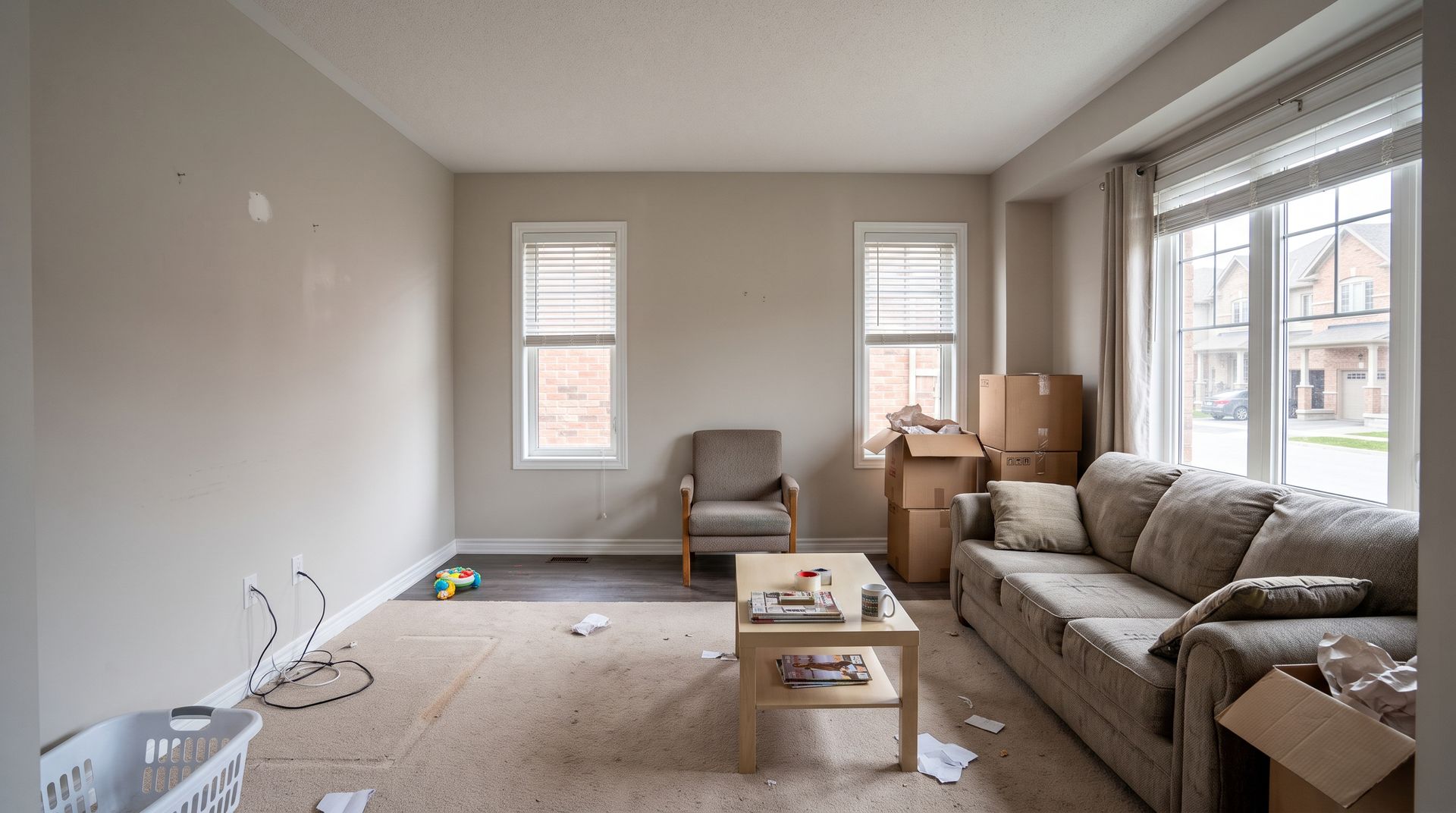
We pressure-test each path against real Milton numbers before anyone commits. The Flowers Team at Royal LePage Meadowtowne Realty has been ranked #1 in Milton since 2009 and has handled 50 divorce-related transactions since January 2024. The sell or keep conversation happens with both of you, using the Single-Income Carrying Cost worksheet and an opinion of value on the house, and every fact goes to both of you at the same time. If the answer is sell, our in-house staging team resets a half-furnished home
from our own warehouse so it presents as a whole house, which shortens the time on market and gets both of you to the finish line faster. If the answer is a buyout, we provide the opinion of value the lender needs. If the answer is to hold for a defined period, we help you set the sale date now, so the wait has an end.
If you are holding a house because selling it feels like losing, run the real number with us before you decide. Book a confidential 21-minute call with Amy, or start with a free home evaluation. The Single-Income Carrying Cost worksheet is free to download on our Navigating Divorce and Real Estate page, no email address required.
Frequently Asked Questions, Built From Real Search Queries
Can we keep the house and sell it later in a divorce?
Yes, with a written agreement that covers who pays what, who lives there, and a firm sale date. Both of you stay on the mortgage and title until it sells, so lenders, renewals and repairs remain joint decisions. Most family lawyers treat this as a short transition rather than a long-term plan.
Should I sell my house during a divorce or wait for the market?
In a flat or falling market, sell. A loss shared during the separation is split by your agreement, while a year of carrying cost on a held house is paid in full and recovered by nobody. Wait only when the market is clearly rising and both of you can carry the cost and the entanglement comfortably.
What happens if we sell the house at a loss in a divorce?
The mortgage is discharged, selling costs come off, and whatever is left, gain or loss, is split according to your separation agreement. A loss does not disappear by waiting; it is either shared now or carried by whoever still owns the house later.
How do I keep the house in a divorce?
By buying out your spouse: agreeing a current value and an equity figure, qualifying for the new mortgage on your own income, and recording it in a signed separation agreement. Most lenders want the agreement before they approve you alone.
What is nesting in a divorce?
Nesting is an arrangement where the children stay in the family home full time and the parents rotate in and out, each keeping another place for their off weeks. It preserves the children's routine for a defined period and costs more than any other option, because it funds two or three homes.
Who pays the mortgage while we are separated and still own the home together?
There is no default answer in law; it has to be agreed in writing, usually with your family lawyer. The arrangement that reliably goes wrong is the unwritten one, where somebody pays and assumes it gets sorted out at closing.
Sources