Should You Finish Your Basement Before Selling in Milton?

Amy Flowers • September 29, 2023

Post Updated: September 2026

No. In almost every case, we tell Milton sellers not to finish the basement before listing. Across more than two decades of selling homes in Milton, the times it made sense can be counted on one hand.


  • The return is the reason. Almost no seller recovers what they spend finishing a basement.
  • Finishing work delays your listing date, and the delay usually costs more than the finish adds.
  • We estimate roughly 90% of finished basements in Milton were built without a building permit.
  • The exception is narrow: a partially finished basement, an owner doing the work themselves, and no pressure on the timeline.
  • With $50,000 to spend before listing, paint, flooring, and the kitchen return more than a basement does.


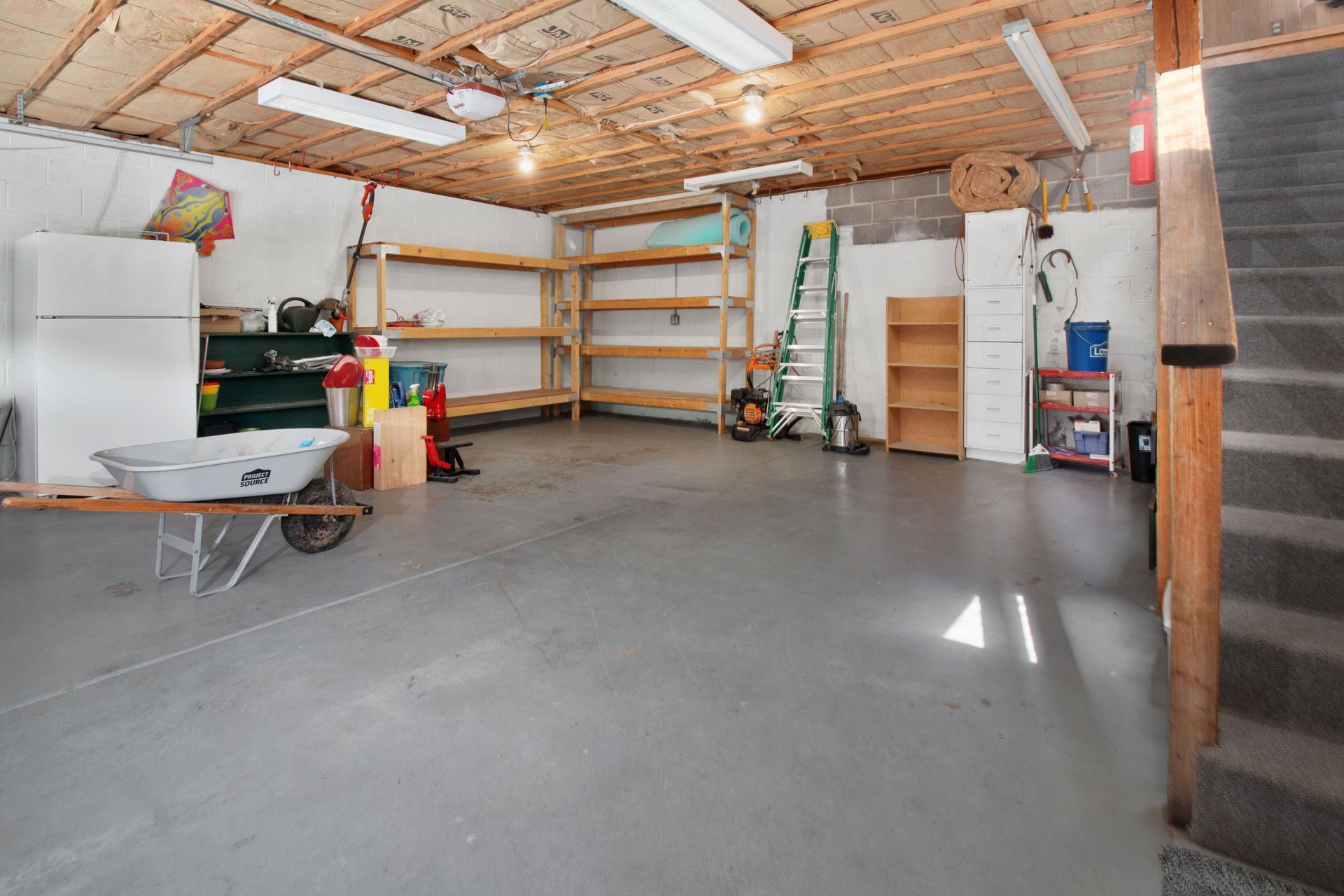
Unfinished basement in a Milton, Ontario home with exposed framing and concrete floor before renovation.

Why Do We Say No to Finishing a Basement Before Listing?

Three main reasons, in order of importance.


1. The Return Is Not There

This settles it on its own. If finishing the basement is a significant investment, and it almost always is, the money does not come back at the closing table. We've seen this across our own Milton sales, and the premium buyers pay for a finished basement doesn't cover what it costs to build one. Our analysis of Milton finished basement sales data goes through the numbers in detail.


2. The Delay Costs You

Renovation pushes back your listing date, sometimes by weeks and often by months. In our experience, sellers feel the delay first because it is concrete in a way return on investment isn't. We rarely want that gap between a seller deciding to move and the property reaching the market.


3. The Market Moves While You Wait

Where the Milton housing market sits when your basement is finished may not be where it sits today.

A spring seller who starts a basement renovation in February could end up listing in June under different market conditions. That uncertainty belongs in the decision, and it almost never argues for waiting.


When Does Finishing a Basement Before Listing Actually Make Sense?

It has happened. Here is the one case that stands out, and it shows how narrow the window is. A seller was off work, so time was not a constraint. He was very handy, did the work himself, and had access to materials. He was not worried about the timeline. His home was in one of Milton’s older neighbourhoods, not one of its newer communities, and finished basements were becoming more common on that street.


We were also coming out of the fall market and heading into winter, so the work filled otherwise quiet time and allowed us to launch the home into the spring market. Every one of those conditions had to line up. Take away the free labour, the free time or the seasonal timing, and the answer goes back to no. This is not a template. It is the exception that proves how rare the case is.


What If Every Other Home in My Neighbourhood Has a Finished Basement?

This is the strongest argument against our position, and it is a fair one. In the older parts of Milton, where the majority of homes and sometimes all of them have finished basements, a finished basement has stopped being a feature and become an expectation. Not having one is a real disadvantage because it can shrink your buyer pool.


Our answer still does not change. That disadvantage usually costs you less than building the finished basement would. You may lose some buyer interest, but you do not lose $60,000. The arithmetic holds even when the market pressure is real.


What About a Half-Finished Basement?

We treat a half-finished basement as an unfinished one. Buyers generally do the same. This comes up often in Milton because of how some homes were originally delivered. When Mattamy finished their houses, they sold the basements unfinished, but sometimes with a few walls already framed in. They were never drywalled. As a result, a generation of Milton homes has that same half-started basement. A buyer walking down the stairs does not necessarily see progress. They see a project.


Determining whether it is worth completing requires the same conversation as a full basement finish:

  • What work is involved?
  • What will it cost?
  • How long will it take?
  • How does the project fit the seller’s timeline?


Because some of the framing already exists, this is the version of the job most likely to make sense before selling.


Does a Finished Basement Need a Permit in Milton?

Yes, in most cases. The Town of Milton requires a building permit for work that creates new habitable space, adds bedrooms or bathrooms, or alters plumbing, electrical or structural elements. Most finished basements we encounter in Milton were not permitted. Based on what we see across local listings, we professionally estimate that roughly 90% of finished basements in Milton were built without a permit.


Far fewer are permitted, and fewer again would qualify as legal second dwelling units. That matters when you sell. A buyer’s first question about a finished basement is often whether it has a permit, and the honest answer is usually no. Adding an unpermitted finish to your home right before listing creates a potential disclosure issue on top of the renovation cost.


Where Should You Spend the Money Instead?

If a seller has $50,000 to spend before listing, we send it upstairs. The stronger return is usually found in the main living spaces, particularly paint, flooring and the kitchen. Those are the areas buyers walk through first, photograph best and compare when deciding what they are willing to pay.


Our guide to the renovations with the highest return before selling explains where each dollar is likely to go further. For many Milton sellers, the better answer is not renovation at all. Professional staging changes how a home shows without changing what is in it, and our in-house staging results are measurable in a way basement renovations are not.


How We Work Through This With Sellers

We walk the house first. Not just the basement, but the entire house, so we can point to the improvements that are most likely to return money. It is almost never a finished basement. From there, we pull comparable Milton sales with finished and unfinished basements in the seller’s own neighbourhood and show the incremental difference. Usually, there is very little. Seeing two columns of real local sales ends the conversation faster than any general advice we could give.


We also review what it costs to finish a basement in Milton so the seller can compare the likely investment against the price difference shown by recent local sales. If a seller decides to go ahead anyway, or is finishing a basement because they plan to stay in the home rather than sell, we can connect them with trades we have used and trust. That service exists either way.


Get Advice Before Spending Money on Your Milton Home

Thinking about selling in Milton and wondering what is worth doing first? Book a free home evaluation with the Flowers Team. We have been ranked #1 in Milton since 2009, and after helping over 3,000 Milton families buy and sell, we will walk through your home and tell you where your money can go further before you spend a dollar.


Call 905-878-6232 or visit flowersteam.ca.


Frequently Asked Questions

  • Should I finish my basement before selling my house in Ontario?

    In almost every case, no. The cost of finishing a basement is rarely recovered in the sale price, and the renovation delays your listing date. We have recommended finishing before listing fewer than a handful of times in more than two decades of selling homes in Milton. In most of those cases, the basement was already partly finished.

  • How much value does finishing a basement add before selling?

    Usually less than it costs. Across Milton sales, homes with finished basements don't consistently sell for a premium that covers the renovation when you compare homes in the same neighbourhood. A finished basement generally keeps a home competitive with buyer expectations rather than adding a predictable amount to its sale price.

  • Is it worth finishing a basement if every other house on my street has one?

    Usually still no. In Milton’s older neighbourhoods, a finished basement has become an expectation, and not having one can shrink your buyer pool. However, that disadvantage usually costs you less than building the basement would. The gap in buyer interest is real, but it is not necessarily worth spending $60,000 to address.

  • Do I need a permit to finish a basement in Milton?

    In most cases, yes. The Town of Milton requires a building permit for work that creates new habitable space, adds bedrooms or bathrooms, or alters plumbing, electrical or structural elements. We estimate that roughly 90% of the finished basements we encounter in Milton were built without a permit, which can become a disclosure issue when the property is sold.

  • What should I renovate before selling instead of the basement?

    Focus on paint, flooring and the kitchen. These are the main living spaces buyers walk through first and compare when evaluating a home. They tend to provide a stronger return than finishing a basement. For many sellers, professional staging can also deliver more value than renovation at a fraction of the cost.

  • What if my basement is half finished?

    We treat it as unfinished, and buyers generally do the same. Many Milton homes were delivered with a few basement walls framed but never drywalled. Because some of the framing already exists, completing one of these basements is the version of the project most likely to be worthwhile. The same test still applies: cost, time and your selling timeline.

  • Should I finish my basement if I am staying in the home?

    That is a completely different question, and the answer is often yes. If you want the space for a family room, home office, gym or somewhere for teenagers or aging parents, you collect that return every day you live there. Finish it for your life, not for resale.

Sources


Permit prevalence and exception frequency are professional estimates based on Flowers Team Real Estate’s transaction experience in Milton as of September 2026. They are not presented as independently measured market statistics.


About the Author

Amy Flowers is the Broker, CEO, and Team Leader of Flowers Team Real Estate, Milton's most-awarded real estate team. A licensed REALTOR since 2001, Amy has spent more than two decades helping Milton families buy and sell with confidence. Under her leadership, the Flowers Team has ranked #1 in Milton since 2009 and is recognized among the top 1% of Royal LePage agents nationwide. The team offers full turnkey service, including in-house staging, professional photography, and a dedicated marketing department, so every client gets a seamless, concierge-level experience from first showing to closing day.


Thinking about buying or selling in Milton? Book a free home evaluation or call the team at 905-878-6232.

Amy Flowers

About the Author

Amy Flowers

Broker, CEO & Team Leader — Flowers Team Real Estate

Amy Flowers is the Broker, CEO, and Team Leader of Flowers Team Real Estate, Milton's most-awarded real estate team. A licensed REALTOR® since 2001, Amy has spent more than two decades helping Milton families buy and sell with confidence. Under her leadership, the Flowers Team has been ranked #1 in Milton since 2009 and recognized in the top 1% of Royal LePage agents nationwide. The team offers full turnkey service, including in-house staging, professional photography, and a dedicated marketing department, so every client gets a seamless, concierge-level experience from first showing to closing day.

Thinking about buying or selling in Milton?

JOIN OUR NEWSLETTER

Newsletter Signup

Flowers Team News

Moving boxes in a home being packed up after a divorce sale in Milton, Ontario
By Amy Flowers | Flowers Team Real Estate • October 21, 2026
Amy Flowers sold the matrimonial home twice and hired an agent both times. Five lessons on selling a home during a divorce in Milton from someone who has.
House keys being handed over outside a family home as one spouse buys out the other in Ontario
By Amy Flowers | Flowers Team Real Estate • October 21, 2026
How a spouse buyout works in an Ontario divorce: the 6 steps, the equity math, the opinion of value a lender needs, and who carries the risk afterward.
Signing a separation agreement at a kitchen table before selling a home in Milton, Ontario
By Amy Flowers | Flowers Team Real Estate • October 21, 2026
Should you sell before or after the separation agreement is signed? It depends on whether either of you is buying again. Here is the order that works.
virtual home staging, AI staging Ontario, digital home staging, virtually staged photos, RECO
By Amy Flowers | Flowers Team Real Estate • October 21, 2026
Virtual home staging and AI listing photos are under scrutiny in Ontario. See what RECO, TRESA and MLS rules say, how to spot AI edits, and why we stage for real.
Two real estate agents from one team reviewing a listing agreement for a divorce sale in Milton
By Amy Flowers | Flowers Team Real Estate • October 21, 2026
Can each spouse have their own real estate agent in a Milton divorce? Yes, when both agents are on one team and one listing agreement. Here is how.
Person taking a quiet moment by a bright window at home while selling a house during a separation
By Amy Flowers | Flowers Team Real Estate • October 21, 2026
Selling a home during a separation is hard in a predictable way. Which stretch is the worst, what you can control, and where to get real support in Milton.
Supportive conversation between a professional and a client at an office table during a separation
By Amy Flowers | Flowers Team Real Estate • October 21, 2026
What is a divorce coach, and why would a Milton realtor train as one? The role, the 4 lines it never crosses, and the step it reinforced before you buy.
Family home on a quiet Milton, Ontario street in September with a For Sale sign on the lawn
By Amy Flowers | Flowers Team Real Estate • October 21, 2026
Co-parenting and real estate in Milton: how school zoning works, whether you can move and keep the same school, and when in the school year to move.