Quick answer
Fix what a buyer or a home inspector will notice, and stop there. Preparing a home for sale during divorce is a different decision from a normal pre-listing project, because whatever one of you spends, both of you split the result. The work that pays for itself is cleaning, paint, small repairs and staging, not a new kitchen.
Worth doing: a deep clean, neutral paint where it is needed, the small repairs an inspector will flag, decluttering, and staging.
Not worth doing: kitchen or bathroom renovations, anything that needs a building permit, and anything that turns into a second argument.
Agree in writing who pays for the work and how it comes off the proceeds, before anyone spends anything.
Our staging is in-house, which takes the single largest preparation cost out of the argument entirely.
Under Ontario’s Family Law Act, neither spouse can sell or encumber an interest in a matrimonial home without the other’s consent, a separation agreement, or a court order. Both of you belong in the preparation conversation for the same reason.
Preparing a house for sale is a straightforward list when two people agree. During a separation it stops being a list and becomes a negotiation, because the person writing the cheque is not the only person who benefits from the result. That is the part no general home-preparation article answers, and it is the part that decides how much your house actually sells for.
The Flowers Team has handled 50 divorce-related transactions since January 2024, and in 2026, 1 in every 7 Flowers Team transactions involves a separating household (Source: Flowers Team internal records, January 2024 to September 2026). The disagreement about what to spend comes up in almost all of them. For the wider picture, start with
our page on selling a home during a separation.
Why preparing a home during a separation is different
One of you wants to spend money getting the house ready. The other does not. That is the pattern, and it is not really an argument about paint.
If one of you has moved out, the person still living there carries the whole burden of the work, the mess, the trades in the house, and the showings, while benefiting from only half the result. Whoever stayed usually feels that imbalance sharply, and whoever left usually underestimates it. Both reactions are reasonable, and both need to be on the table before anyone picks up a paint roller.
There is also a fairness question underneath it. Money spent on the house before closing comes out of somebody’s pocket and lands in both people’s proceeds. How that is accounted for sits alongside
the wider question of how property is divided in Ontario and is a question for your family lawyer, not for us, but it has to be settled in writing before the work starts rather than argued about at closing.
Who pays for the work before the house is listed?
There is no default answer in law. It is a negotiation, and it is one of the few in a separation where the two of you actually want the same thing. Three arrangements cover most files.
Split the cost as it is spent. Simplest when both parties have access to money and the amounts are small. Keep every receipt.
One person pays and is reimbursed off the top at closing. Written into the agreement before the first dollar goes out, with an agreed ceiling. This is the most common arrangement when one spouse has already left.
Nobody spends, and the house sells as is. A legitimate choice. The price is set to reflect the condition, and the market takes its discount rather than one of you taking a risk.
Whichever you pick, put it in writing and have your lawyer look at it. The one arrangement that reliably goes wrong is the unwritten one, where somebody spends and assumes it will be sorted out later. It also helps to have
a clear picture of what the house costs to run on one income before you agree to any spending at all.
This is also where Ontario law makes the point for us. Neither spouse can sell or encumber an interest in a matrimonial home without the other’s consent, a separation agreement releasing those rights, or a court order. The house is a joint decision by statute, which means the preparation of it is a joint decision in practice.
What is worth doing
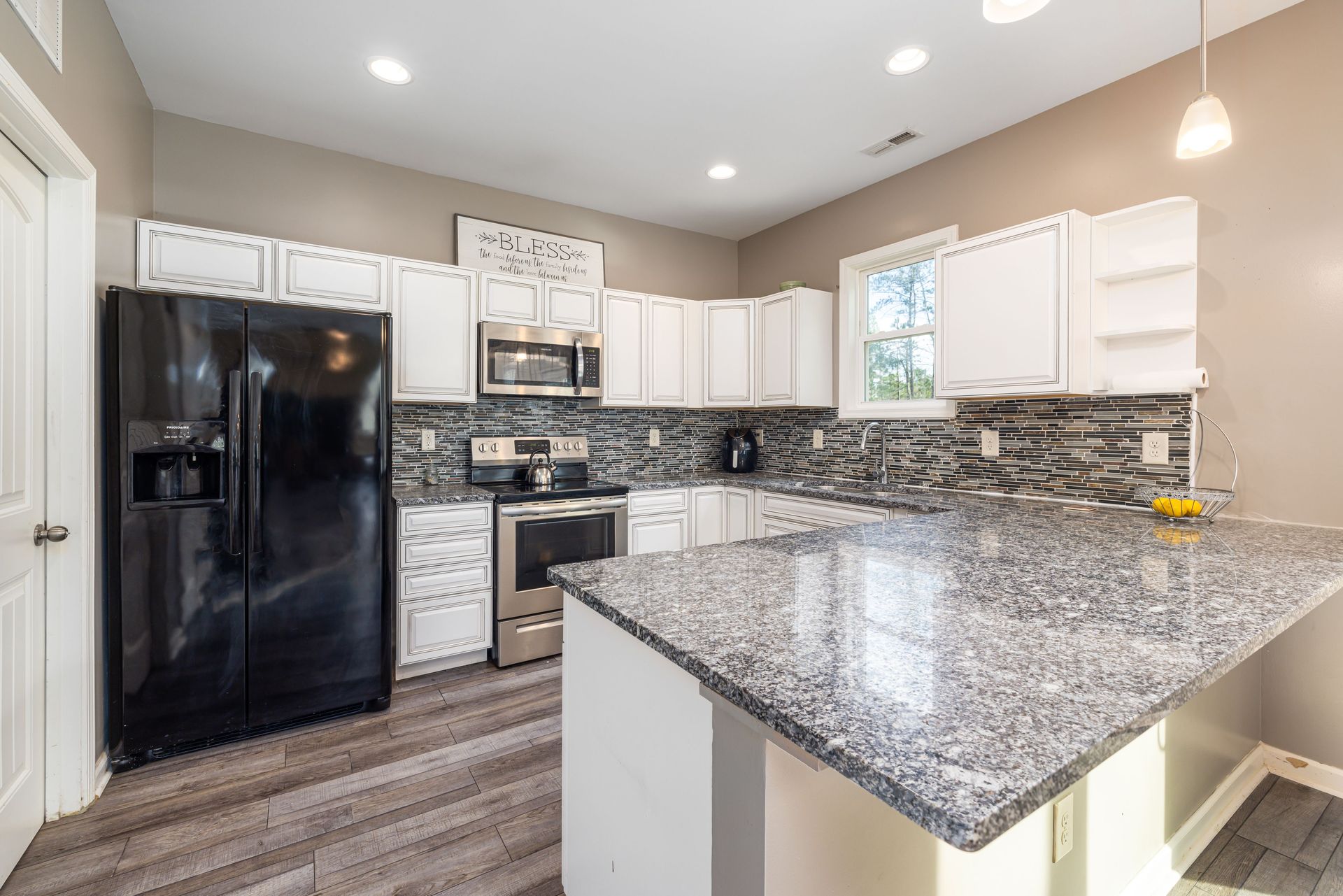
A deep clean, top to bottom. The cheapest thing on this list and the one buyers notice first. Windows, grout, appliances, baseboards, and the smell of the house.
Neutral paint where it is needed. Not every room. The rooms with bold colour, scuffed walls, or a child’s mural that will not survive the photographs.
The small repairs a home inspector will find. Dripping taps, running toilets, a furnace that has not been serviced, cracked caulking, a loose railing. These are cheap to fix and expensive to negotiate against after an offer.
Declutter, carefully. Half a house that has already been packed reads as distressed rather than tidy. The goal is even, not empty.
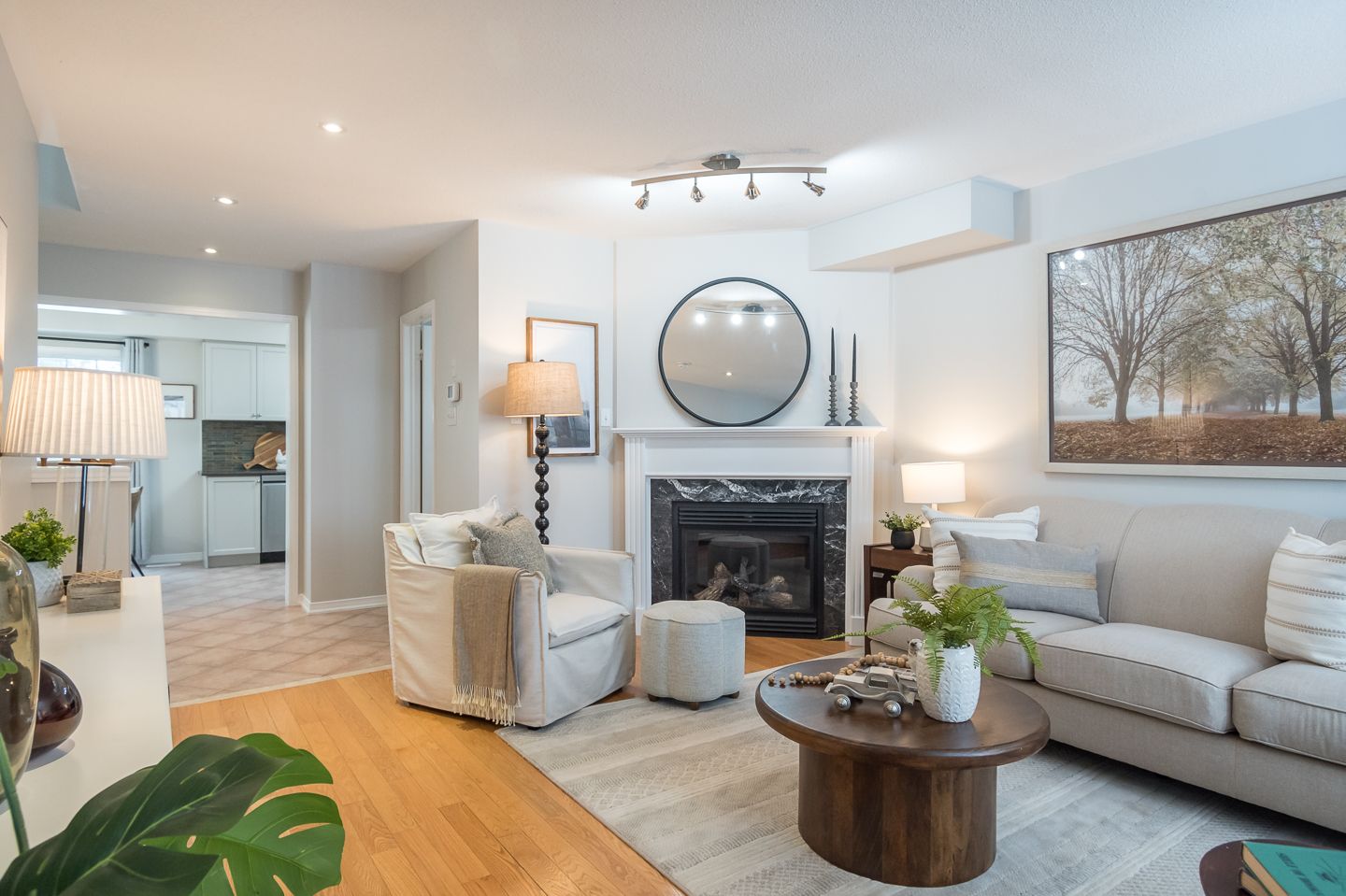
Staging. The highest-return item on the list, and the one that does the most work in a separation.
Our staging service runs in-house, for the reasons covered below.
Tidy up the front of the house while you are at it. Cut grass, clear the walkway, a swept porch. Buyers form an opinion in the driveway, and none of this costs anything worth arguing over.
What is not worth doing
- Kitchen and bathroom renovations. The classic mistake. You will not recover the full cost in this market, the work takes weeks you do not have, and you are asking two people who are separating to agree on tile.
- Anything that needs a building permit. Decks, structural changes, and anything touching electrical, plumbing or gas. Permits take time, and unpermitted work becomes a disclosure problem. Check with the Town of Milton before starting anything you are unsure about.
- Landscaping projects. Tidy is worth doing. Redesigned is not. Nobody has ever bought a house because of the new beds.
- Anything one of you cannot comfortably afford alone. If the money is tight enough that spending it creates a second fight, the spending is costing you more than the work is worth.
Three levels of preparation, and when each one fits
What if one of you has already moved out with half the furniture?
Stage it. A half-furnished house is the single clearest signal a buyer can read, and what they read is that the sellers are motivated. Rooms with one chair and a lamp look smaller than empty rooms, and empty rooms look smaller than furnished ones. Buyers underestimate the size of a space they cannot picture using.
Our staging department is in-house, led by
our in-house Certified Staging Professional, Tara Llewellyn, who is certified in professional home staging and home redesign through QC Design School and has been voted Milton’s #1 stager since 2017. She and the team have staged over 1,000 homes. Because the staging is ours rather than a third-party invoice, it stops being a line item the two of you have to agree to fund, which removes the biggest preparation argument from the file before it starts.
What if you are both still living in the house?
Staging still earns its place. It shortens time on market and moves the whole process along faster, which matters more than usual when two people who are separating are still sharing a kitchen. The faster the house sells, the shorter that period lasts.
See what staging does to a Milton home before you decide it is not worth it.
Showings and open houses run on your schedule as far as the market allows. If you do not want an open house, you do not have one. Losing control of your own home is one of the harder parts of a separation, and the listing should take back as little of it as possible.
What the preparation is actually buying you
In 2025, homes we listed sold in an average of 23.18 days against a Milton average of 30, at an average sale-to-list ratio of 100.02% against a Milton average of 98.67%. On the average Milton sale price of $1,040,000, that works out to $13,832 more in the sellers’ pockets and 7 fewer days on market (Source: 2025 independent data, Milton).
Split two ways, that difference is worth more than almost any preparation budget the two of you will argue about. It is also why the decision that matters most is not which room to paint. It is getting the house presented properly and priced correctly the first time, which is also what
our guide to staging a home during a divorce goes into room by room.
Mistakes to avoid
- Spending before you have agreed who pays. The work is rarely the problem. The unwritten assumption about reimbursement is.
- Renovating to win an argument. Money spent to make a point is money neither of you gets back.
- Doing nothing because you cannot agree. The market prices your disagreement, and it prices it higher than the work would have cost.
- Letting the half-empty house tell your story. Buyers read a partly cleared-out home correctly, and they write their offers accordingly.
- Over-improving a house you are splitting. Every dollar past the point of diminishing return is a dollar one of you contributed and both of you split.
What if we cannot agree on any of it?
That happens, and it is workable. We go through the preparation decisions with both of you, with the same rule we apply to everything else on a divorce file: facts about the house and the sale reach both parties at the same time, and personal commentary shared with us stops with us. If joint meetings are not working, we split into separate conversations and nothing else changes. We have run sales where court orders were in place, under exactly the same rule.
If a preparation decision genuinely cannot be settled, we will tell you what each option is likely to cost you in price and in time, and let the numbers make the argument instead of either of you.
Talk to us before you spend anything
If you are separating and the house is part of the decision, have the conversation before the work starts rather than after. We will prepare
the free home evaluation we do for every seller, walk through exactly what is worth doing on your house and what is not, and put the preparation plan in writing so both of you are looking at the same page. The first conversation is confidential and costs nothing. Call the Flowers Team at 905-878-6232 or reach us at flowersteam.ca.
We understand that divorce is a sensitive and confidential matter. To respect your privacy, we will not initiate phone calls unless we have received your explicit written consent.
Frequently Asked Questions, Built From Real Search Queries
Should we renovate before selling the house in a divorce?
No, in almost every case. Renovations take weeks you do not have, rarely return their full cost, and require two separating people to agree on design decisions. Cleaning, paint, small repairs and staging deliver most of the available return for a fraction of the money and the time.
Who pays for repairs and staging when a couple is separating?
There is no default answer in law, so it has to be agreed in writing before anyone spends. The three common arrangements are splitting costs as they are spent, one person paying and being reimbursed off the top at closing with an agreed ceiling, or selling the house as is with the price set to match. Have your family lawyer review whichever one you choose.
Do we have to stage the house if one of us has already moved out?
You do not have to, and it is the situation where staging returns the most. A half-furnished house tells buyers the sellers are motivated, and rooms holding one or two pieces of furniture photograph smaller than they are. Our staging department is in-house, so it does not arrive as a separate invoice the two of you have to agree to fund.
Can one spouse sell the matrimonial home without the other’s consent in Ontario?
No. Under Ontario’s Family Law Act, neither spouse can sell or encumber an interest in a matrimonial home unless the other consents, has released those rights in a separation agreement, or a court order authorizes it. This applies even when only one spouse is on title. Your family lawyer is the right person to confirm how it applies to your situation.
Is it worth fixing things a home inspector would find?
Yes, and it is the highest-value repair spending you will do. A dripping tap or an unserviced furnace costs very little to fix beforehand and becomes a price negotiation after an offer, when you have the least leverage. Fix the small things first and the cosmetic things second.
How long does preparing a home for sale during a divorce take?
Two to three weeks is typical for cleaning, paint, small repairs and staging. Longer than that usually means the plan has crept into renovation territory, which is worth reconsidering. We build the timeline backward from when you need the house sold, not forward from when the work could start.
What if we cannot agree on what to spend?
We put the options in front of both of you with what each is likely to cost in price and in days on market, so the numbers carry the decision rather than either person. Facts about the house go to both parties at the same time. If joint meetings stop working, we move to separate conversations and the rule does not change.
Sources
Family Law Act, R.S.O. 1990, c. F.3, section 21, https://www.canlii.org/en/on/laws/stat/rso-1990-c-f3/latest/ (accessed September 4, 2026)
Town of Milton, Building permits, https://www.milton.ca/en/business-and-development/building-permits.aspx (accessed September 4, 2026)
2025 independent data, Milton. Milton average sale price $1,040,000, average days on market 30, average sale-to-list ratio 98.67%. Flowers Team average days on market 23.18, sale-to-list ratio 100.02%.
Flowers Team internal records, January 2024 to September 2026, divorce transaction counts and share of business
Not intended to solicit properties currently under contract.